



Sigma 2 Receptor
Sigma-2 receptor (σ2R), identified as TMEM97, is an endoplasmic-reticulum transmembrane protein linked to cancer biology, NPC1 interaction, and sterol-related regulation[1]. Mechanistically, TMEM97 cooperates with PGRMC1 and LDLR to form a ternary complex that increases LDL internalization, placing σ2R research in cholesterol trafficking and membrane-transport studies[2]. In Alzheimer-related models, the TMEM97-PGRMC1-LDLR complex mediates cellular uptake of Aβ42 and its aggregates, supporting its use in amyloid-uptake experiments[3]. In tumor models, σ2R expression tracks proliferative status in solid tumors, making it useful for proliferation-focused oncology research[4]. Compared with σ1R, σ2R/TMEM97 requires subtype-selective ligand validation, because classical DTG binding can overlap with σ1R assays[5]. For experimental design, TMEM97 or PGRMC1 knockout did not change sigma-2 ligand-induced cytotoxic EC50 values in HeLa cells, so cytotoxicity should not be assigned automatically to either protein[5]. For imaging applications,[^18F]ISO-1 PET uptake has been evaluated as a marker of breast-cancer proliferation, linking σ2R ligands to translational tumor-imaging studies[6]. Recent cellular studies further show that sigma-2 receptor ligand binding modulates the association between TSPO and TMEM97, expanding mechanistic assays beyond PGRMC1-centered models[7].
References:
- [1]. Alon A, et al. Identification of the gene that codes for the σ2 receptor. Proc Natl Acad Sci U S A. 2017 Jul 3;114(27):7160-7165. [Content Brief]
- [2]. Riad A, et al. Sigma-2 Receptor/TMEM97 and PGRMC-1 Increase the Rate of Internalization of LDL by LDL Receptor through the Formation of a Ternary Complex. Sci Rep. 2018 Nov 15;8(1):16845. [Content Brief]
- [3]. Riad A, et al. The Sigma-2 Receptor/TMEM97, PGRMC1, and LDL Receptor Complex Are Responsible for the Cellular Uptake of Aβ42 and Its Protein Aggregates. Mol Neurobiol. 2020 Sep;57(9):3803-3813. [Content Brief]
- [4]. Wheeler KT, et al. Sigma-2 receptors as a biomarker of proliferation in solid tumours. Br J Cancer. 2000 Mar;82(6):1223-32. [Content Brief]
- [5]. Zeng C, et al. TMEM97 and PGRMC1 do not mediate sigma-2 ligand-induced cell death. Cell Death Discov. 2019 Jan 28;5:58. [Content Brief]
- [6]. McDonald ES, et al. Breast Cancer 18F-ISO-1 Uptake as a Marker of Proliferation Status. J Nucl Med. 2020 May;61(5):665-670. [Content Brief]
- [7]. Thejer BM, et al. Sigma-2 Receptor Ligand Binding Modulates Association between TSPO and TMEM97. Int J Mol Sci. 2023 Mar 28;24(7):6381. [Content Brief]
-
Sigma 2 Receptor Related Products (34)
Related Products (34)

- 1
- 2
-
Zervimesine
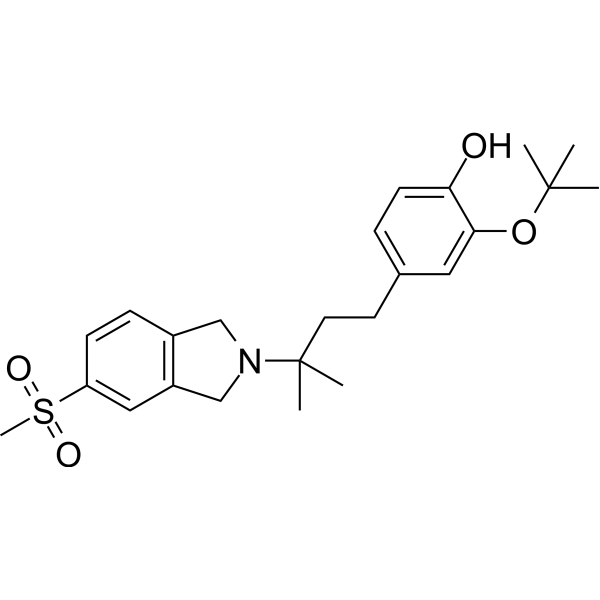 0 ImagesSynonyms: CT1812; Sigma-2 receptor antagonist 1Zervimesine (CT1812) is an orally active and brain penetrant sigma-2 receptor antagonist with a Ki of 8.5 nM. Zervimesine can be used for the research of Alzheimer’s disease.
-
Cutamesine dihydrochloride
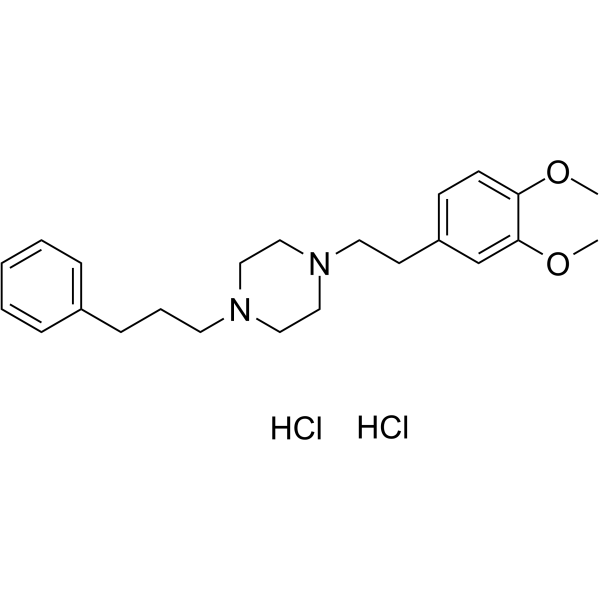 0 ImagesSynonyms: SA4503 dihydrochloride; AGY94806 dihydrochlorideCutamesine (SA4503) dihydrochloride is a potent and selective sigma 1 receptor agonist with an IC50 of 17.4 nM in guinea pig brain membranes. Cutamesine dihydrochloride shows >100-fold less affinity for the sigma 2 receptor (IC50 of 1784 nM). Cutamesine dihydrochloride has antidepressant effects.
-
(±)-Vesamicol hydrochloride
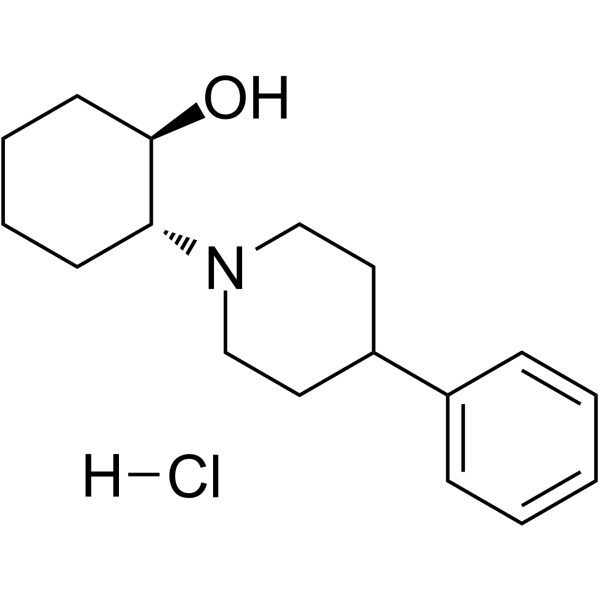 0 ImagesSynonyms: (±)-AH5183 hydrochloride(±)-Vesamicol hydrochloride ((±)-AH5183 hydrochloride) is a potent vesicular acetylcholine transport inhibitor with a Ki of 2 nM. (±)-Vesamicol hydrochloride also displays high affinity for σ1 and σ2 receptors with Kis of 26 nM and 34 nM, respectively.
-
Glycerol phenylbutyrate
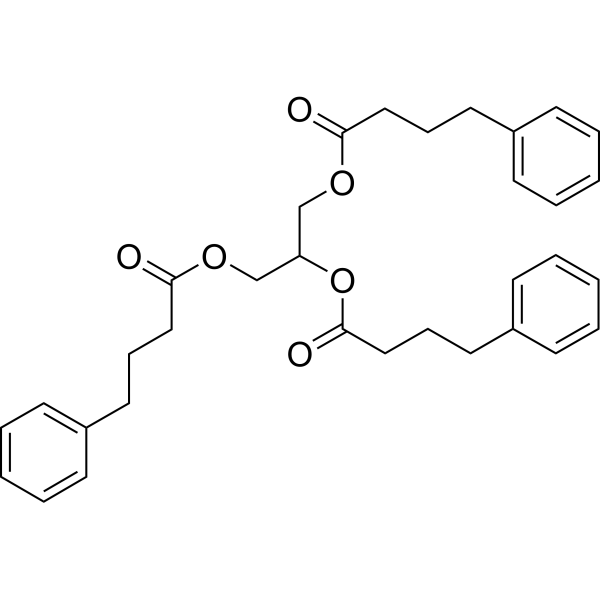 0 ImagesSynonyms: HPN-100Glycerol phenylbutyrate is a sigma-2 (σ2) receptor ligand, with a pKi of 8.02. Glycerol phenylbutyrate (GPB) is a new generation ammonia scavenger agent.
-
Cutamesine
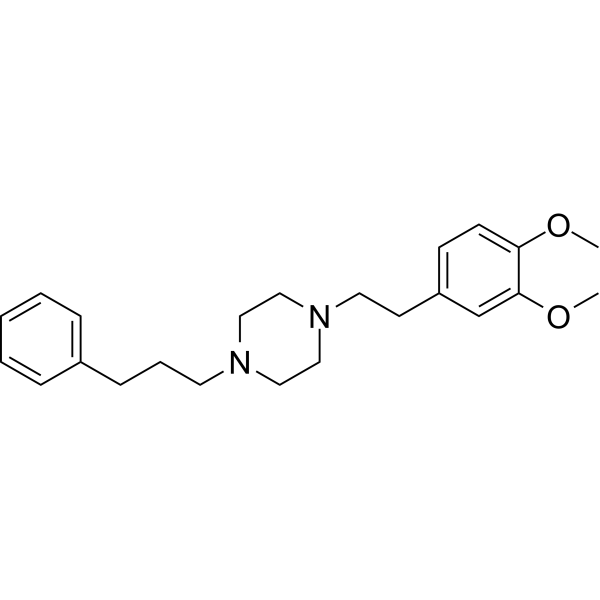 0 ImagesSynonyms: SA4503; AGY 94806Cutamesine (SA4503) is a potent and selective sigma 1 receptor agonist with an IC50 of 17.4 nM in guinea pig brain membranes. Cutamesine shows >100-fold less affinity for the sigma 2 receptor (IC50 of 1784 nM). Cutamesine has antidepressant effects.
-
JVW-1009
 0 ImagesCat. No.: HY-116968CAS No.: 2089059-30-1JVW-1009 is a Sig2R/PGRMC1 antagonist (Sig1R Ki = 96 nM; Sig2R Ki = 70 nM). JVW-1009 acts as a neuroprotective agent. JVW-1009 can be used in the research of Alzheimer's disease.
-
CM398
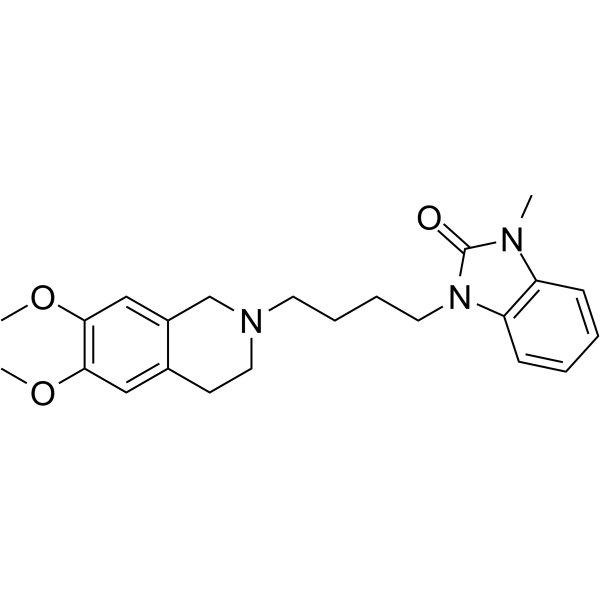 0 ImagesCM398 is a highly selective, orally active Sigma-2 receptor ligand with a Ki value of 0.43 nM. CM398 ameliorates age-related macular degeneration. CM398 exerts analgesic effects on visceral pain, inflammatory pain and neuropathic pain. CM398 can be used in research related to age-related macular degeneration, neuropathic pain and inflammatory pain.
-
S1RA
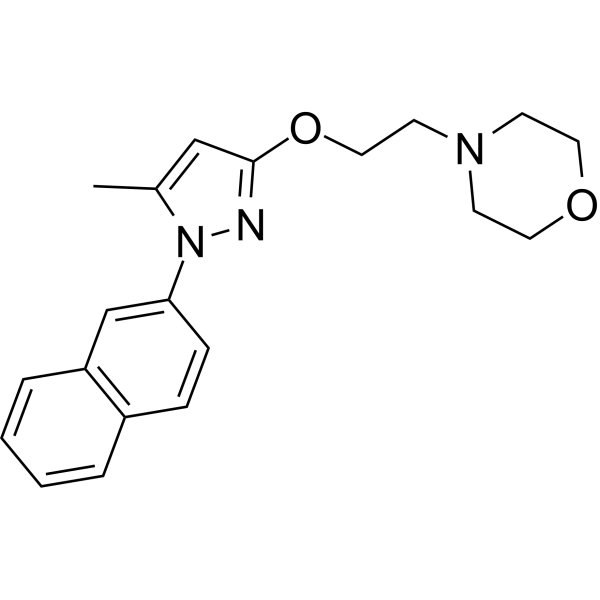 0 ImagesSynonyms: E-52862S1RA (E-52862) is a highly selective σ1 receptor (σ1R) antagonist with Kis of 17 nM and 23.5 nM for human σ1R and guinea pig σ1R, respectively. S1RA has Moderate antagonistic activity for human 5-HT2B receptor (Ki= 328 nM). S1RA has antinociceptive effects in neuropathic pain models. S1RA prevents mechanical and cold hypersensitivity in Oxaliplatin (HY-17371)-treated mice.
-
Ditolylguanidine
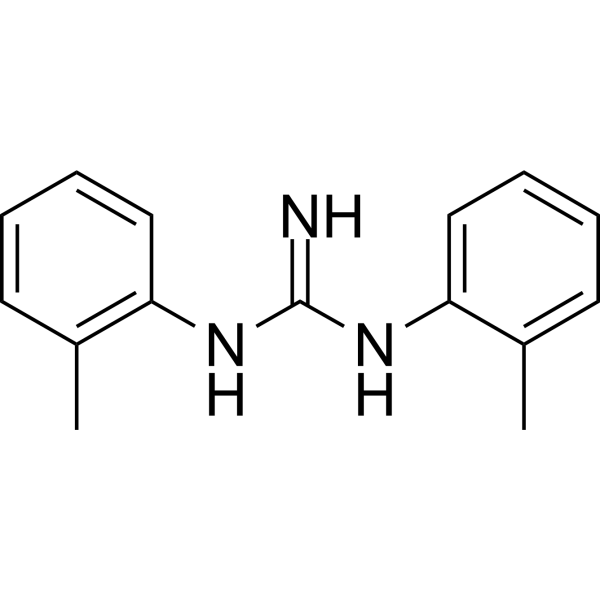 0 ImagesDitolylguanidine (1,3-Di-o-tolylguanidine) is an agonist of sigma receptor (σ1/σ2 receptor) with Ki values of 69 and 21 nM for σ1 and σ2 receptors, respectively. Ditolylguanidine effectively inhibits the growth of small cell lung cancer cells. Ditolylguanidine can be used for the research of lung cancer.
-
Pentoxyverine citrate
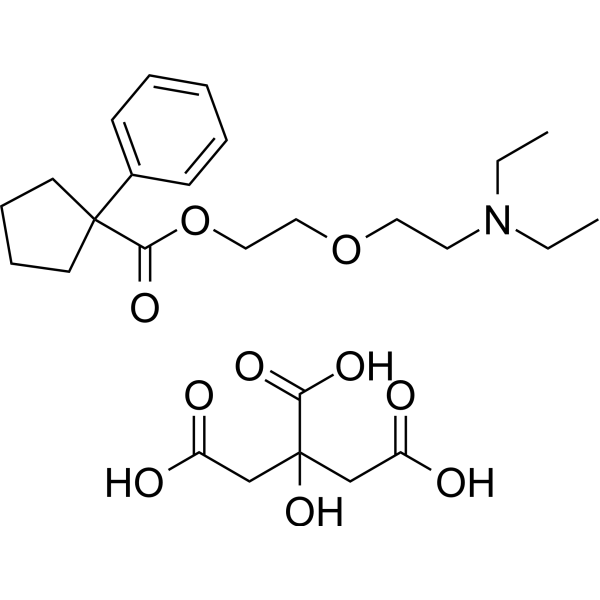 0 ImagesSynonyms: Carbetapentane citratePentoxyverine (Carbetapentane) citrate is an orally active and blood-brain barrier permeability sigma-1 receptor agonist, with Kis of 41 nM, 894 nM and 75 nM for σ1, σ2 and guinea-pig brain membrane σ1, respectively. Pentoxyverine citrate is a muscarinic antagonist. Pentoxyverine citrate is a potent antitussive, anticonvulsant, and spasmolytic agent. Pentoxyverine citrate can be used for inhibiting bronchial interceptor, weakening of cough reflex, bronchial smooth muscle relaxation and reduction of airway resistance.
-
Pentoxyverine
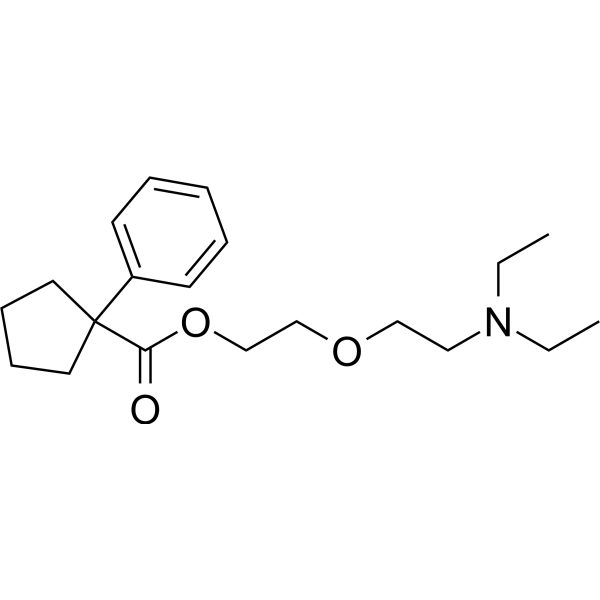 0 ImagesPentoxyverine (Carbetapentane) is an orally active sigma-1 receptor agonist, with Kis of 41 nM, 894 nM and 75 nM for σ1, σ2 and guinea-pig brain membran σ1, respectively. Pentoxyverine is a muscarinic antagonist. Pentoxyverine is a potent antitussive, anticonvulsant, and spasmolytic agent. Pentoxyverine can be used for inhibiting bronchial interceptor, weakening of cough reflex, bronchial smooth muscle relaxation and reduction of airway resistance.
-
4-IBP
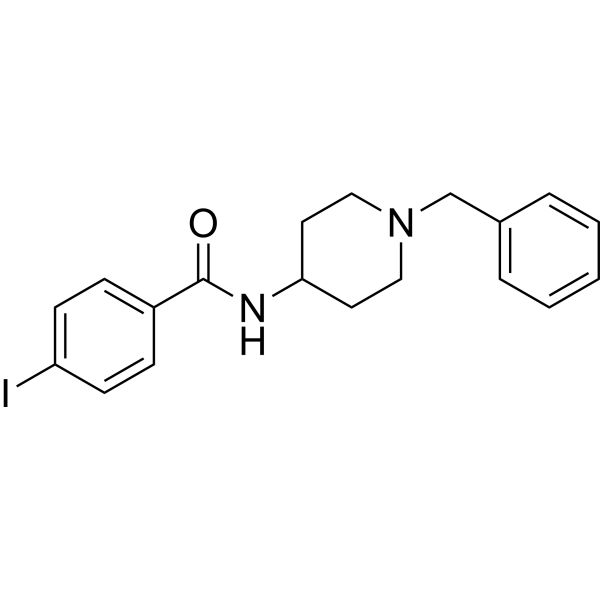 0 Images4-IBP is a selective σ₁ receptor agonist with high affinity for the σ₁ receptor (Ki =1.7 nM) and moderate affinity for the σ₂ receptor (Ki = 25.2 nM). 4-IBP can make cancer cells more sensitive to the cytotoxic effects of pro-apoptotic and pro-autophagic compounds. 4-IBP significantly reduces the migration ability of a variety of cancer cells. 4-IBP is mainly used in glioblastoma, non-small cell lung cancer and prostate cancer research.
-
BD-1008
 0 ImagesBD-1008 is a nonselective σ receptor antagonist with Kis against σ1 receptor and σ2 receptor of 2 nM and 8 nM. The BD-1008 has an extremely low affinity for the D2 receptor (Ki = 1112 nM) and dopamine transporter (DAT) (Ki > 10,000 nM). BD-1008 significantly antagonizes dopamine release in the shell region of the nucleus accumbens via the σ₂ receptor. BD-1008 blocks the self-administration behavior of σ agonists.BD-1008 can be used for the study of addiction therapy that target the σ receptor.
-
Convolamine
 0 ImagesConvolamine is a tropane alkaloid and a potent Sigma-1 receptor positive allosteric modulator with an IC50 value of 289 nM. Convolamine can be extracted from Convolvulus plauricalis. Convolamine exhibits cognitive-improving and neuroprotective properties. Convolamine can be used in research related to Wolfram syndrome and Alzheimer's disease.
-
S1R agonist 1
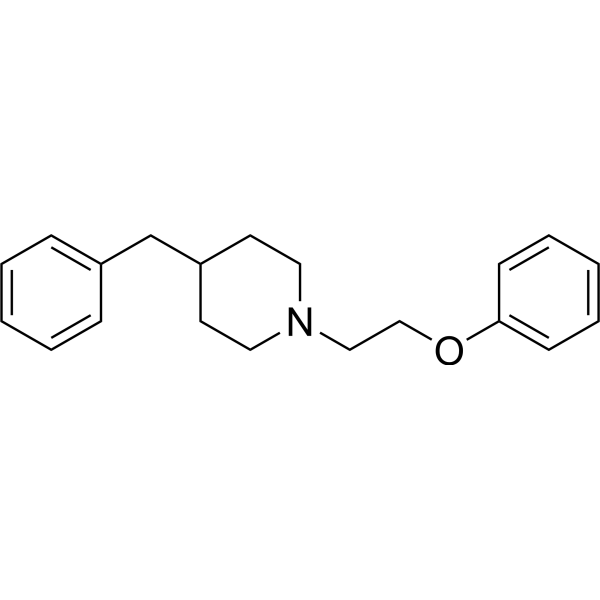 0 ImagesS1R agonist 1 (Compound 6b) is a selective S1R agonist with Kis of 0.93 nM and 72 nM for S1R and S2R, respectively. S1R agonist 1 exhibits neuroprotection against ROS and NMDA-induced neurotoxicity.
-
BD-1008 dihydrobromide
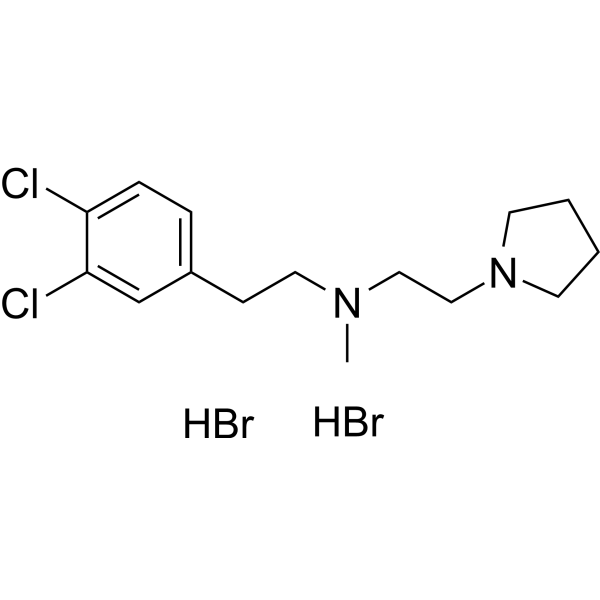 0 ImagesBD-1008 dihydrobromide is a nonselective σ receptor antagonist with Kis against σ1 receptor and σ2 receptor of 2 nM and 8 nM. The BD-1008 dihydrobromide has an extremely low affinity for the D2 receptor (Ki = 1112 nM) and dopamine transporter (DAT) (Ki > 10,000 nM). BD-1008 dihydrobromide significantly antagonizes dopamine release in the shell region of the nucleus accumbens via the σ₂ receptor. BD-1008 dihydrobromide blocks the self-administration behavior of σ agonists.BD-1008 dihydrobromide can be used for the study of addiction therapy that target the σ receptor.
-
UKH-1114
 0 ImagesUKH-1114 is a selective TMEM97 (a sigma-2 receptor) agonist with a Ki values of 1279 and 46 nM for σ1R and σ2R/TMEM97, respectively. UKH-1114 exhibits exceptional selectivity with negligible affinity for over 50 other receptors and channels. UKH-1114 effectively relieves spared nerve injury (SNI)-induced mechanical hypersensitivity with a long-lasting duration and without motor impairment. UKH-1114 can be used for neuropathic pain research.
-
S1R agonist 2
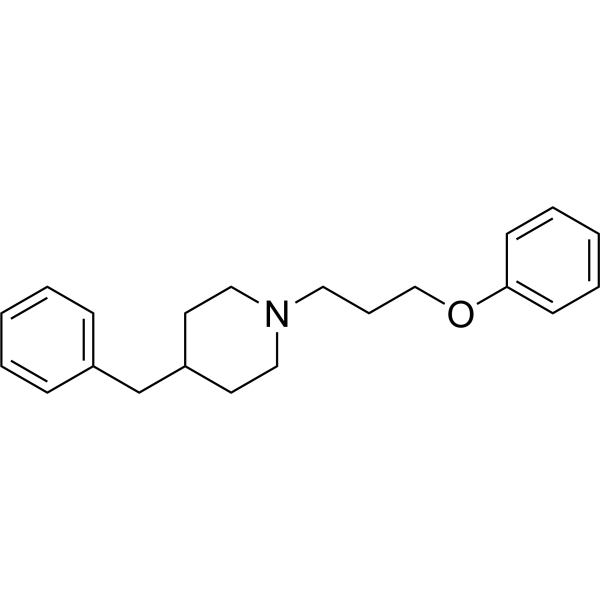 0 ImagesS1R agonist 2 (Compound 8b) is a selective S1R agonist with Kis of 1.1 nM and 88 nM for S1R and S2R, respectively. S1R agonist 2 exhibits neuroprotection against ROS and NMDA-induced neurotoxicity.
-
NMDA receptor antagonist 9
 0 ImagesCat. No.: HY-181007NMDA receptor antagonist 9 is a selective GluN2B subunit-containing NMDA receptor antagonist with a Ki of 5.2 nM. NMDA receptor antagonist 9 exhibits 9-fold selectivity over σ1 receptors, shows poor selectivity towards σ2 receptors. NMDA receptor antagonist 9 inhibits ion flux through GluN2B subunit-containing NMDA receptors. NMDA receptor antagonist 9 can be used for the research of neurological disease, such as alzheimer’s disease and parkinson’s disease.
- 1
- 2



